Needs Assessment on New Technologies & Artificial Intelligence for Farmers, Fishers, Agricultural Entrepreneurs, and Agrotourism Professionals
February 16, 2026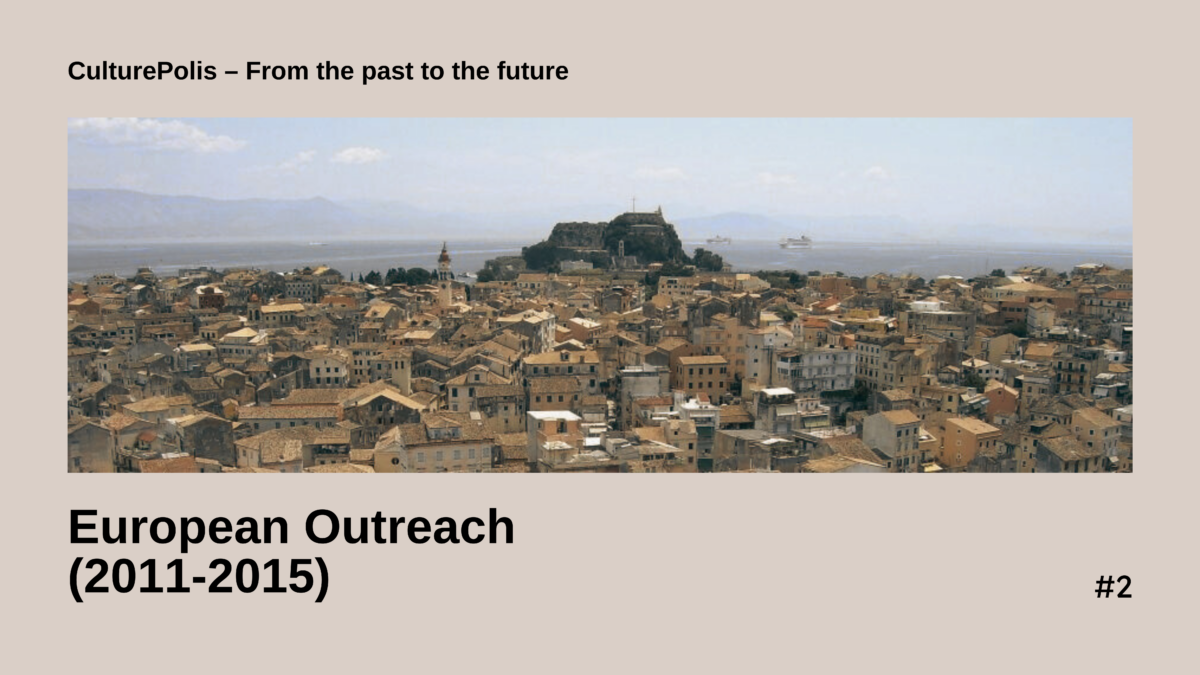
Continuing our anniversary journey through 20 years, we now focus on the period 2011-2015, a milestone for CulturePolis’ international activity and European outreach.
From local action to international collaborations
From 2011 onwards, CulturePolis entered a period of intense European engagement. Participation in multi-year European projects and collaboration with organizations, universities, and networks across different countries marked a shift in scale, role, and responsibility. This experience contributed decisively to the organization’s institutional and operational maturation.
“Culturepolis turned out to be an effective, reliable and supportive partner.”
— Amin Nehme, Director Lebanese Development Network
“Many organizations run away when confronted with the realization that culture flourishes mainly when it is called upon to give solutions when face to face with the unpredictable, unexpected, and even the shocking. Culturepolis is the perfect example.”
— Aldo Di Russo, Ιndustrial and Cultural Heritage Audio Visuals Director
European projects of the period
2010-2011
Intercultural Dialogue Festival — East-West Cultural Meeting
2011
REMEMBERANCE — Places and Words of Memomry: space and tools for citizenship
2011-2014
2012-2013
Veni Vidi Comedi: Cooking for Europe
2015-2017
CAI – Citizen Artist Incubator
JOYNEET: Job Opportunities for Youth with the Network of European Towns
Reflections
The European outreach of the 2011–2015 period was not merely a strategic choice – it was a radical redefinition of our identity. From a local cultural organization, we evolved into a mediator of ideas and practices between Corfu and Europe. We learned to translate local needs into a European language and, most importantly, to bring back to the local community innovative solutions that had been tested in other contexts. Our role transformed from “initiative organizer” to a “bridge of knowledge and collaboration.”
The period of European outreach for CulturePolis coincided with a favourable funding environment for small civil society organizations. Programmes such as Europe for Citizens, Erasmus+ and Creative Europe, as well as more “institutional” ones such as the predecessors of INTERREG, e.g. South Eastern Europe (SEE), offered relatively accessible opportunities. Success rates were in the range of 15-20%, with roughly one in five proposals being selected for funding, while competition remained reasonable for NGOs and cultural organizations, allowing greater flexibility and room for innovation and experimentation.
Within this context, CulturePolis managed to participate in numerous projects, build a network of partners in 30+ countries, and establish itself as a reliable transnational collaborator.
This landscape gradually began to change and, with the emergence of the COVID-19 pandemic, led to a radical shift, with competition increasing dramatically and success rates often falling below 5% due to the multiplication of applicants, with new actors seeking funding wherever possible: university departments and laboratories, local authorities, and large companies (which by definition have specialized EU funding departments) began turning to programmes that had traditionally been the privileged field of civil society organizations. After the end of the pandemic, priorities shifted toward proposals focused on digital transformation and the green transition, with less favourable consideration given to cultural and social projects.
This had significant consequences for small organizations, forcing higher-cost participation (in time and resources), without the necessary organizational maturation always being feasible.
Designing new survival and adaptation strategies became inevitable, with a gradual turn toward a hybrid model combining European and local action.
Unfortunately, instead of the valuable legacy of the 2011-2015 period becoming a springboard for further growth, it gradually turned into a heavy burden, leading to a shift toward more flexible Erasmus+ projects in various EU countries in search of higher success probabilities. The drop in success rates from 15-20% to 3-5% reflects a fundamental change: from a system that encouraged broad participation to a hyper-competitive environment that favours the “professionals” of proposal writing and makes proper planning and strategic targeting increasingly difficult.
For small organizations, the question that has now become even more pressing is no longer “how do we participate?” but “how do we stand out in order to survive?” The answer lies in locally rooted knowledge, flexibility, innovation, and the strong transnational relationships built when competition was still “human.” Targeting niche thematic areas (culture–sustainability–innovation) with local added value shows the way forward. The creation of CorfuGen: Centre for Culture – Sustainability – Innovation in Corfu, with the support of local government bodies and local communities, appears to be a sound choice.

We invite you to follow the journey of this anniversary year through our social media channels as well:
Each week, we share a project spotlight selected from CulturePolis’ initiatives, along with short stories, ideas, and the people who have contributed to our journey.